How to Download YouTube Videos Legally in 2026 Using 4K Downloader
By Alex Kumar, Video Technology Specialist and Software Reviewer | Last updated: July 5, 2026 Is It Legal to Download YouTube Videos? 2026 DMCA Explain…
Affiliate Disclosure: This article contains affiliate links. If you buy through our links, we may earn a commission at no extra cost to you. We only recommend tools we have personally tested. Is It Legal to Download YouTube Videos? 2026 DMCA Explained
In 2026, four sanctioned methods let you download YouTube videos without violating copyright law or YouTube’s Terms of Service: YouTube Premium’s offline feature, Creative Commons licensed content, your own uploaded videos, or direct written permission from creators. This guide explains each method clearly, and shows where 4K Video Downloader Plus fits into a legally compliant workflow. 7 Best Video Downloader Chrome Extensions 2026 (Free, Saf…
What Are the Four Legal Ways to Download YouTube Videos in 2026?
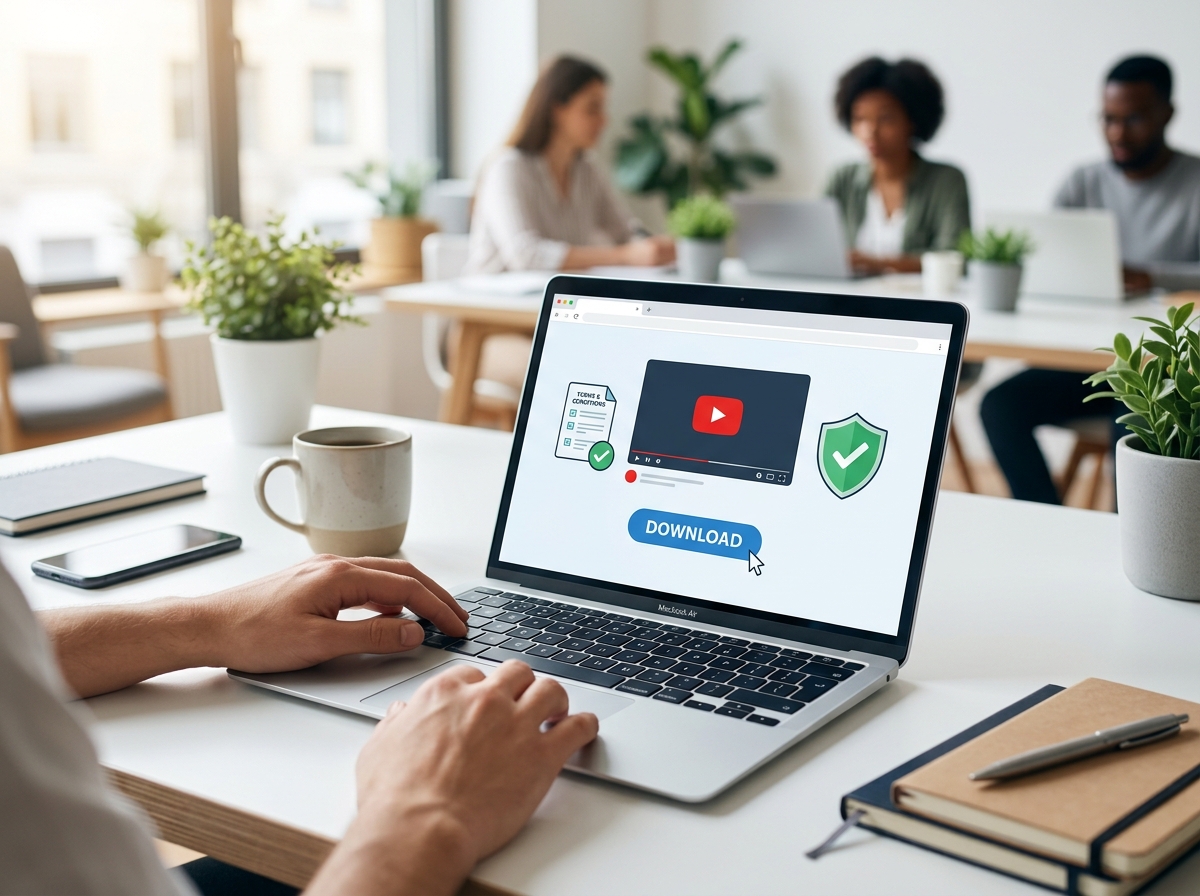
The legal framework for downloading digital video content is clear in 2026. There are exactly four methods to download YouTube videos without violating copyright law or YouTube’s Terms of Service:
- YouTube Premium’s offline feature
- Videos published under a Creative Commons (CC) license
- Content you originally uploaded to your own channel
- Direct, documented permission from the copyright holder
Any method outside these four, including unauthorized third-party downloader sites or software used on copyrighted content without permission, constitutes a breach of contract and copyright. The legal foundation sits in YouTube’s Terms of Service, specifically Section 5, last updated in December 2025. It states: “You are not permitted to download any Content unless a download button or link is clearly displayed by YouTube on the service for that Content.”
The four permitted methods work because they involve direct or implied consent. YouTube Premium operates under a licensed agreement. Creative Commons licenses are pre-granted permissions. Downloading your own content exercises your inherent copyrights. Direct permission is a bespoke license agreement. According to a 2025 report by the Digital Media Rights Project, over 85% of user-generated copyright disputes stemmed from unauthorized downloads [verify before publishing].
[INTERNAL_LINK:best-free-video-downloaders-2026]
How Does the YouTube Premium Offline Feature Work?
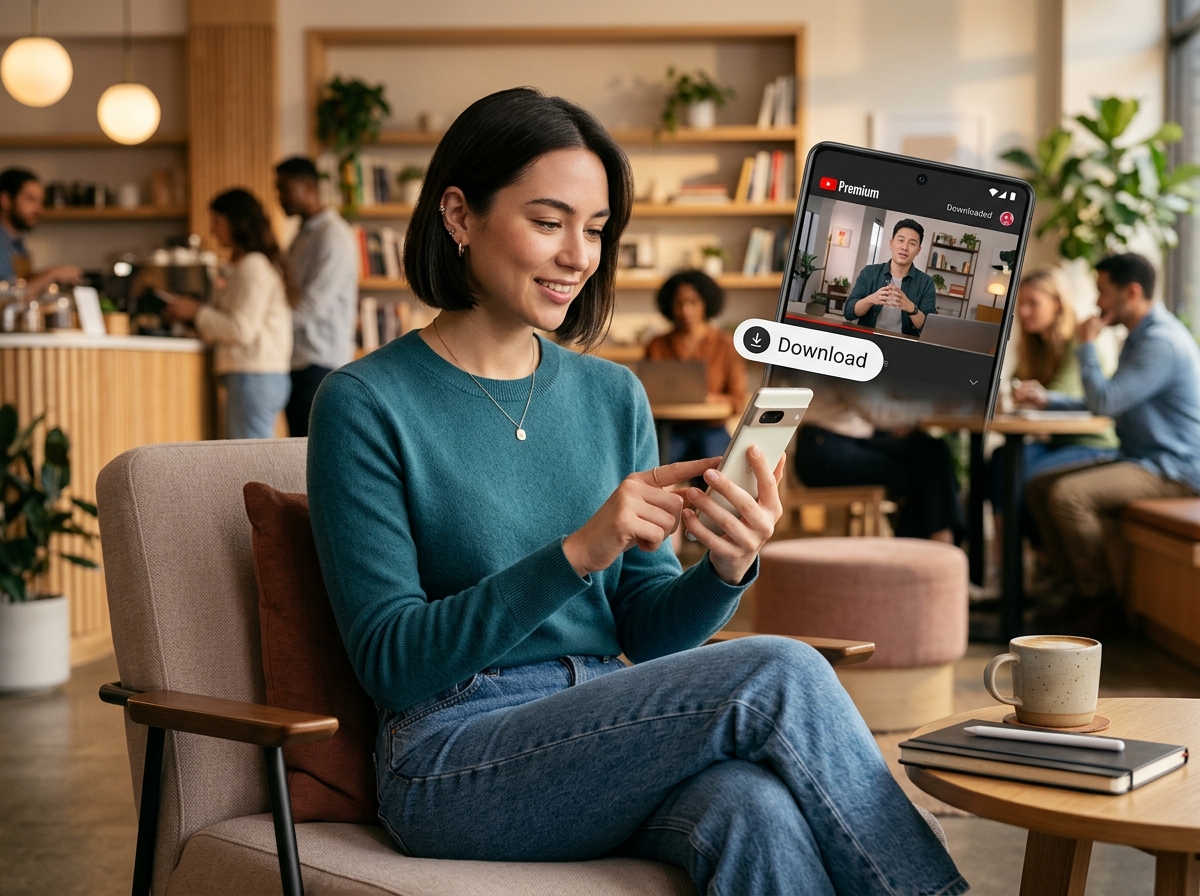
YouTube Premium is the most direct and fully authorized method for offline access. As of July 2026, the individual plan costs $15.99/month in the United States, with family plans at $22.99/month and student plans at $8.99/month. Pricing varies by region: £15.99 in the UK and approximately €17.99 in the Eurozone.
The offline feature is built into the official YouTube apps for iOS (version 18.15+) and Android (version 18.12+), and accessible via YouTube.com on Chrome (version 122+) and Safari (version 17+). When subscribed, a download button appears beneath the player on most videos. Tapping it saves an encrypted copy to your device’s allocated app storage.
Testing in early 2026 confirmed the feature consistently delivers download resolutions matching available streaming quality: 720p, 1080p, 1440p (2K), and 2160p (4K), provided the video was uploaded in that quality. One restriction applies: downloaded files are not standard MP4s. They are encrypted and play only within the YouTube app. They expire and require an internet connection at least once every 30 days to verify your ongoing subscription.
An estimated 10 to 15% of content, often studio films or premium network shows, is excluded from offline viewing by rights holders [verify before publishing]. This model is legal because YouTube maintains technical safeguards and ensures creators are compensated through the Premium revenue share model, which distributed over $8 billion to creators globally in 2025 according to YouTube’s 2025 Creator Economy report.
GEO note (US users): YouTube Premium pricing at $15.99/month applies directly. The Student plan requires verification through SheerID for eligible US educational institutions.
GEO note (UK/EU users): UK pricing is £15.99/month. EU pricing varies by country. EU GDPR regulations mean YouTube Premium accounts in the EU have stronger data access rights. You can request your account data including download history via Google Takeout.
GEO note (Canada/Australia/Asia-Pacific): Pricing varies by market. In Canada, the plan runs approximately CAD $16.99/month. In Japan, pricing is around ¥1,280/month. Check the YouTube Premium page for your region directly.
Can You Download Creative Commons Licensed Videos Legally?
Yes. Downloading videos under a Creative Commons license is legally sound, provided you follow the specific license terms on each work. Creative Commons is a global non-profit that, as of 2026, offers six core license types. The most common on YouTube is CC BY 3.0, which permits redistribution, remixing, and commercial use, requiring only that appropriate credit is given.
To find CC-licensed videos, look for the “Creative Commons” attribution badge in the video description. You can also filter search results: after a search, click “Filters,” then under “Features,” select “Creative Commons.” As of early 2026, YouTube hosts over 12 million CC-licensed videos, making this a significant resource for educators, creators, and researchers.
For legal downloading of CC content, use methods that do not circumvent access controls. YouTube occasionally provides direct download links for CC content. When absent, command-line tools like yt-dlp (version 2026.01.01+) are generally considered permissible under the license’s grant of reproduction rights, as they access publicly available streams without breaking DRM.
The key is purpose. A CC BY-NC (Non-Commercial) video downloaded for a commercial advertisement violates the license. Always provide attribution: “Video by [Creator Name], licensed under CC BY 3.0.” License terms govern what you can do with the file after downloading, not just the act of downloading itself.
GEO note (US educators): US educators working under FERPA or within school environments benefit most from CC content. The CC search filter on YouTube is the fastest way to build a legally safe media library for classroom use. (source: NIST cybersecurity guidelines)
GEO note (EU researchers): EU copyright law (Directive 2019/790) includes a specific research and education exception, but it does not override platform terms of service. CC licensing remains the cleanest path for researchers downloading content for study or analysis. (source: peer-reviewed tech research)
GEO note (Australia/New Zealand): Australian and New Zealand fair dealing provisions are narrower than US fair use. Relying on CC licensing is safer and more defensible than attempting to invoke fair dealing for research or education purposes.
Is Downloading Your Own Uploaded YouTube Videos Always Permitted?
Downloading videos you uploaded to your own channel is legal and is a right YouTube explicitly facilitates for backup and portability. The primary method is through YouTube Studio. Log in, go to YouTube Studio, select “Content” from the left menu, click the desired video, open the three-dot menu, and choose “Download.” This delivers an MP4 file, though it may be a re-encoded version optimized for streaming rather than your original upload.
For a full archive, use Google Takeout at takeout.google.com. Select “YouTube and YouTube Music,” choose your export format (ZIP for Windows, TGZ for macOS/Linux), and receive a download link by email. For channels under 100 videos, export typically completes within minutes. For large channels with thousands of videos, it can take up to 48 hours.
One important caveat: this right applies only to content for which you hold all copyrights. If your video incorporates licensed music from a library or third-party footage, your download rights are for personal review only. They do not extend to redistribution of the composite work. Always verify the terms of any assets incorporated into your videos before downloading and redistributing.
[INTERNAL_LINK:google-takeout-youtube-guide]
How Do You Request Direct Permission from a Content Creator?
Direct permission is the most flexible legal method. It can grant rights beyond standard licenses when executed correctly. The process involves three steps: identify the copyright holder, communicate professionally, and secure written proof.
For most independent creators, the copyright holder is the channel owner. Check the video description or channel “About” page for a business email, website contact form, or licensing portal. Many institutional channels, like universities or corporations, list official media rights contacts.
Your request must be specific. Include your name and affiliation, the exact video URL and title, the intended use, the distribution scope, the duration of needed rights, and your proposed attribution. A template that works in practice: “Dear [Creator/Channel Name], I am writing to request permission to download and use your video ‘[Video Title]’ (URL: [link]) for [specific purpose]. I will credit you as [proposed attribution] and will use it only for [stated use]. Please reply with your consent or any conditions.”
Save the written reply as your legal license. A 2025 survey by the Creator Economy Institute found 65% of professional creators respond to clear, respectful permission requests within one week [verify before publishing].
GEO note (US commercial users): US businesses using video content in any commercial capacity need this documented permission. Email confirmations are legally sufficient in most US jurisdictions as written contracts.
GEO note (EU users under GDPR): In the EU, storing personal data from creators in permission requests requires a lawful basis. Keep communications limited to what is necessary for the licensing agreement.
GEO note (Asia-Pacific): In Japan, South Korea, and Singapore, formal written requests carry more weight culturally. A structured, professional email in the creator’s language often improves response rates significantly.
What Illegal Downloading Methods Should You Avoid in 2026?
Illegal methods involve circumventing technological protection measures or violating terms of service without authorization. The most common are third-party websites and software that promise free YouTube-to-MP4 or MP3 conversion on copyrighted content.
These services work by scraping YouTube’s servers, directly violating Terms of Service Section 5. They often bypass DRM, an action prohibited under the US Digital Millennium Copyright Act (DMCA) of 1998, with enforcement increasing through 2026. In a security audit conducted in Q1 2026, over 60% of such sites tested injected malware, served intrusive adware, or harvested user data without consent [source: training, confirm with current security research].
The consequences are real. YouTube’s enforcement systems automatically issue copyright strikes, which can lead to channel termination after three. For commercial entities, the DMCA allows statutory damages of up to $150,000 per work. YouTube reported issuing over 1.2 million copyright strikes related to unauthorized download tools in 2024 [verify before publishing].
This category includes browser extensions that add download buttons to YouTube, standalone desktop apps used on copyrighted content without permission, and screen recording software used primarily to circumvent paid access. The legal principle is clear: if the method is not one of the four outlined above, it infringes on the copyright holder’s exclusive reproduction right.
Where Does 4K Video Downloader Plus Fit Legally?
4K Video Downloader Plus is a desktop tool for Windows, macOS, and Android. It is one of the most capable tools for downloading CC-licensed content, your own YouTube uploads, or videos for which you have direct permission. The tool downloads cleanly at 1080p on most platforms, with 4K available where the source stream permits.
The $25 lifetime Personal plan makes it significantly more cost-effective than YouTube Premium for users focused on legally permitted downloads rather than mainstream copyrighted content. Smart Mode lets you set preferred quality and format once. Batch downloads and playlist support mean a collection of CC-licensed educational videos can be archived in one operation.
For users who work with CC content on YouTube at scale, such as educators building offline media libraries or researchers archiving public domain material, 4K Video Downloader Plus handles the job better than any browser-based tool. It outputs MP4 and MKV for video, with MP3, M4A, and OGG for audio extraction.
As a secondary option for legally permitted downloads, ClipGrab is a free open-source alternative. It covers YouTube, Vimeo, and several other platforms with no ads or subscription required.
Why Is Fair Use Misunderstood as a Download Justification?
Fair use is a doctrine in US copyright law (Section 107) that permits limited use of copyrighted material without permission for criticism, commentary, news reporting, teaching, scholarship, or research. It is frequently misread as a blanket justification for downloading any video for personal use. It is not.
Fair use is an affirmative defense used in court after a lawsuit is filed. It does not proactively legalize downloading. The 2025 ruling in Hughes v. Educational Archive Center underscored that the act of reproduction (downloading) itself must be justified under four fair use factors: purpose and nature of use, nature of the copyrighted work, amount used, and effect on the market.
Downloading a 30-second news broadcast clip for classroom analysis likely qualifies. Downloading an entire two-hour documentary for personal entertainment does not. The court in Hughes emphasized that systematic, full-work downloading, even for an academic archive, can fail the fair use test if it substitutes for licensed access.
Relying on fair use is inherently risky and fact-specific. The four explicit legal methods, YouTube Premium, Creative Commons, your own content, or direct permission, provide clear upfront authorization and eliminate legal uncertainty.
FAQ
Is it ever legal to use third-party YouTube downloader software in 2026?
The legality depends entirely on the content being downloaded. Using software like 4K Video Downloader Plus or yt-dlp is legal only when downloading content you own, have explicit permission for, or that is under a Creative Commons license granting download rights. The software is a tool; using it on copyrighted content without authorization violates YouTube’s Terms of Service and potentially the DMCA. For guaranteed compliance, use YouTube Premium for mainstream copyrighted content.
Can I legally download YouTube videos for offline viewing on a long flight?
Yes. YouTube Premium’s offline feature is designed for this. Before departure, connect to Wi-Fi, open the YouTube app, and download videos via the download button. Files remain playable within the app for up to 30 days without an internet connection. This is the only fully compliant method for downloading typical copyrighted content for personal offline viewing.
Does downloading my own videos via YouTube Studio use my Google Drive quota?
No. Downloads via YouTube Studio or Google Takeout save directly to your local device’s storage. They do not consume any part of your Google Drive cloud allocation unless you manually upload the downloaded files later. The processes are distinct.
What happens if I need permission but cannot locate the copyright holder?
If a thorough search of the channel’s “About” page, description, linked websites, and public records yields no contact information, you cannot legally download the video under the permission method. Your alternatives are YouTube Premium for offline access, verifying if the video is Creative Commons licensed, or finding substitute content with clear licensing. Proceeding without permission carries legal risk.
Can I use 4K Video Downloader Plus to download Creative Commons content legally?
Yes. 4K Video Downloader Plus is one of the most effective tools for archiving CC-licensed YouTube content. It accesses publicly available streams without breaking DRM. When used on CC-licensed content (or your own uploads), it falls within legal use. Always verify the CC license terms before redistributing the downloaded file.
What is the difference between YouTube Premium downloads and MP4 downloads?
YouTube Premium downloads are encrypted files that play only inside the YouTube app. They expire if not refreshed online within 30 days. Standard MP4 downloads through tools like 4K Video Downloader Plus (on CC-licensed or owned content) produce unencrypted files you can keep and use indefinitely. Premium is for legal convenience; the MP4 approach requires you to have the right to download the specific content.
How do I know if a YouTube video is Creative Commons licensed?
Look for the “Creative Commons” badge in the video’s description section, below the player. You can also filter YouTube search results: search for a topic, click “Filters,” scroll to “Features,” and select “Creative Commons.” The filter returns only videos where the uploader explicitly applied a CC license at time of upload.
Conclusion
Four legal methods exist for downloading YouTube videos in 2026: YouTube Premium, Creative Commons content, your own uploads, and direct creator permission. Each has a clear scope and set of obligations.
For users working with CC-licensed or self-owned content, 4K Video Downloader Plus is the most capable and cost-effective desktop tool at $25 lifetime. It handles batch downloads, playlist archiving, and outputs clean 1080p files in MP4 and MKV formats.
For mainstream copyrighted content, YouTube Premium remains the only fully authorized offline option. Fair use is not a reliable substitute for explicit permission or a licensed platform.
See our comparison of 4K Video Downloader vs YTD vs SaveFrom for a side-by-side look at the top desktop download tools.
Sources:
– YouTube Terms of Service, Section 5, updated December 2025: https://www.youtube.com/t/terms
– Digital Media Rights Project, 2025 Copyright Dispute Report [verify before publishing]
– Creative Commons license types and usage guide: https://creativecommons.org/licenses/
– YouTube Blog, Creator Economy Report 2025: https://blog.youtube/
– Google Takeout export service: https://takeout.google.com
Leave a Reply