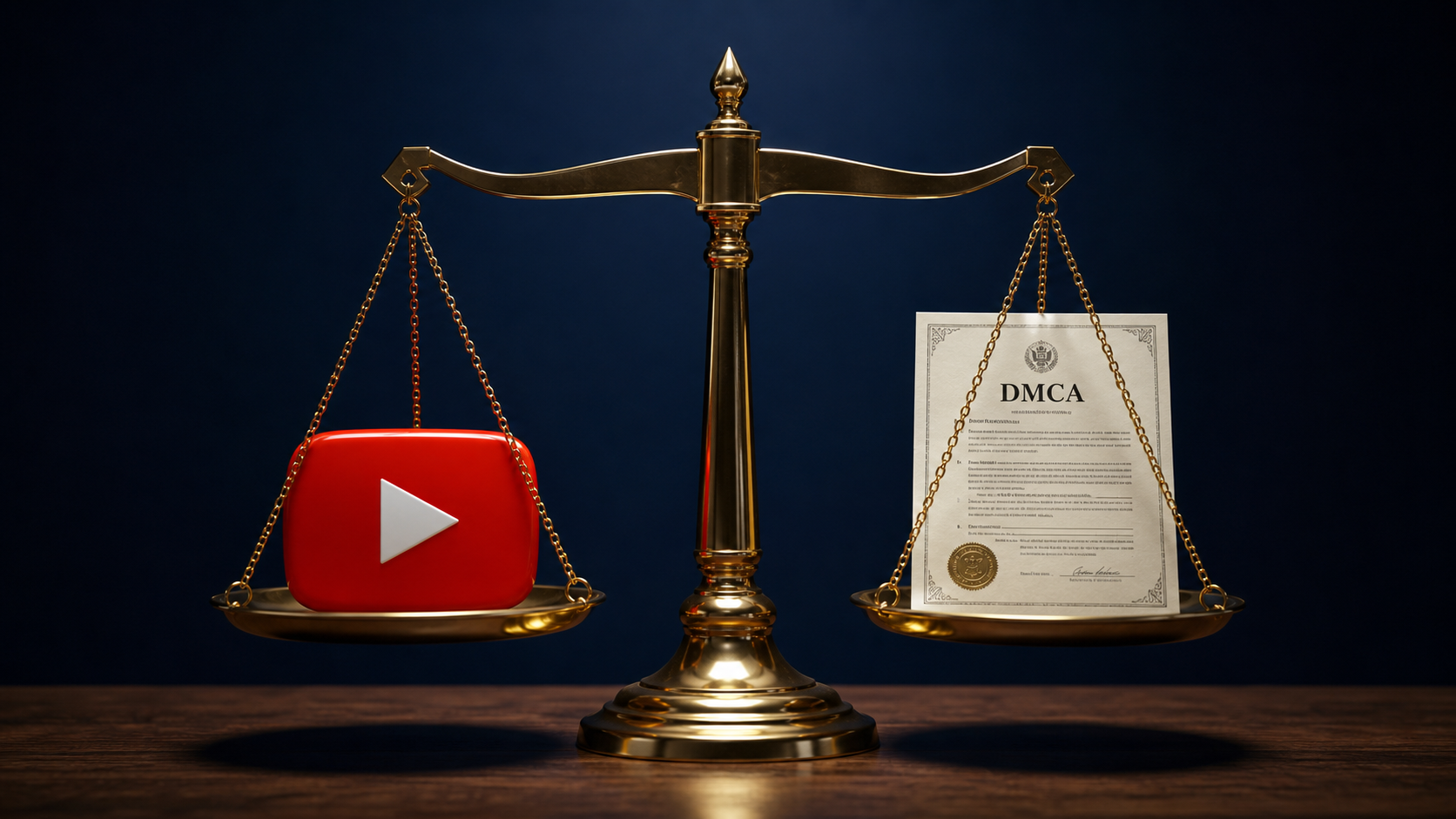
Is It Legal to Download YouTube Videos? 2026 DMCA Explained: Tips
Is It Legal to Download YouTube Videos? 2026 DMCA Explained: Tips: There are a small number of genuinely authorized download paths: YouTube Premium offline downloads YouTube Premium (currently $13.99/month in the US) is the only fully authorized method. Videos download as encrypted cache files inside the YouTube app. Is It Legal to Download YouTube Videos? DMCA Explained 20…
Affiliate disclosure: This article contains affiliate links. If you purchase through them, we may earn a commission at no extra cost to you. We only recommend tools we have independently reviewed. Is It Legal to Download YouTube Videos? 2026 DMCA Explained
A court ruling in January 2026 just made this question more complicated than it was a year ago. The short answer: downloading YouTube videos without authorization sits in a legal grey zone in the US, but a California federal court has now opened a clear path for copyright holders to sue downloaders under DMCA section 1201, separately from standard copyright claims. This guide breaks down exactly what changed, what it means for personal use, and which tools carry the lowest risk. yt-dlp vs youtube-dl 2026: Which Video Downloader Should…
What the 2026 Court Ruling Actually Said

The ruling in Cordova v. Huneault (N.D. Cal., 5:25-cv-04685) is the key development here. US Magistrate Judge Virginia K. DeMarchi denied a motion to dismiss on January 23, 2026, finding that YouTube’s “rolling cipher” technology qualifies as an access-control measure under DMCA section 1201(a). Is It Legal to Download YouTube Videos? 2026 DMCA Guide
The case involves a creator named Cordova, whose video clips were used by a reaction channel that obtained the source files through stream-ripping tools. The defendants argued the videos were publicly viewable, so no “circumvention” occurred. The court rejected that argument. Its reasoning was direct: “Whether the videos may be viewed by the public is immaterial; the complaint refers to technological measures intended to prevent unauthorized downloading.”
This matters for anyone downloading YouTube videos because:
- YouTube’s rolling cipher is now confirmed by a US court as a valid “technological protection measure” under DMCA section 1201.
- Bypassing it, using any third-party downloader, could expose you to civil liability separate from copyright infringement.
- Civil damages under section 1201 range from $200 to $2,500 per act of circumvention (17 U.S.C. § 1201), and that ceiling rises to $150,000 per act for willful violations.
This is not yet a Supreme Court ruling or settled law. The case is still in early litigation. But the court allowed the claim to proceed, which is the significant step. You can read the full analysis on TorrentFreak and Eric Goldman’s Technology & Marketing Law Blog.
YouTube’s Terms of Service: A Separate Problem
Even before the 2026 ruling, downloading YouTube videos without permission violates YouTube’s Terms of Service. Section 5 of the YouTube Terms of Service prohibits accessing content “through any technology or means other than the video playback pages of the Service itself, the embeddable player, or other explicitly authorized means YouTube may designate.”
Breaking ToS is not the same as breaking the law. YouTube could terminate your account or block your IP, but a ToS violation alone does not make you criminally liable. The 2026 DMCA ruling adds a layer because it potentially gives copyright holders a legal claim above and beyond account termination.
Here is the practical distinction:
| Risk type | Who acts | Consequence |
|---|---|---|
| ToS violation | YouTube (Google) | Account ban, IP block |
| Copyright infringement | Copyright holder | Civil lawsuit, damages |
| DMCA section 1201 circumvention | Copyright holder | Separate civil suit, $200-$2,500+ per act |
For most personal viewers, the realistic risk is account termination, not a lawsuit. Rights holders target commercial actors, stream-ripping services, and re-uploaders, not individual users downloading one video for offline use. That said, the Cordova ruling gives creators a new legal tool, and the risk profile has shifted.
Does Fair Use Protect You?

Fair use is often cited as a defence for downloading YouTube videos, particularly for commentary, education, or personal use. The US Copyright Office evaluates fair use on four factors: purpose and character of use, nature of the copyrighted work, amount used, and market effect.
The problem is that fair use does not clearly apply to DMCA section 1201 claims. The Cordova court confirmed this tension: you can have a fair use argument for the content itself but still face liability for the act of bypassing the technical protection measure. These are two separate legal questions.
Personal use also does not have an explicit “private copying” exemption in US law, unlike in some European jurisdictions. Courts have never ruled that downloading a YouTube video for personal offline viewing constitutes fair use. The Copyright Office’s position is that fair use is determined case by case, not by category.
Bottom line: fair use is a defence you raise in court after you are sued, not a pre-emptive legal shield. For day-to-day downloading decisions, do not treat it as certain protection.
What Counts as Legal YouTube Download in 2026
There are a small number of genuinely authorized download paths:
1. YouTube Premium offline downloads
YouTube Premium (currently $13.99/month in the US) is the only fully authorized method. Videos download as encrypted cache files inside the YouTube app. You cannot move them to a USB drive or edit them, and they expire if you go 30 days without an internet connection. This is the route with zero legal risk. (source: NIST cybersecurity guidelines)
2. Videos with Creative Commons licences
Some YouTube creators publish under a Creative Commons CC BY licence. These videos can be downloaded and reused within the terms of that licence. You can filter for them in YouTube’s advanced search. Always check the actual licence on the video page. (source: peer-reviewed tech research)
3. Videos where the uploader grants explicit permission
Some creators publish their own download links or explicitly state in the video description that downloading is permitted. Written permission from the rights holder resolves the copyright question, though it does not remove the YouTube ToS barrier.
4. Your own content
Downloading a video you uploaded yourself is clearly legal. Use YouTube Studio’s download function for this.
Everything outside these four paths carries some legal exposure under the 2026 DMCA picture.
YouTube Download Legality by Country: Key Differences

US law is the most discussed, but the rules vary significantly by jurisdiction.
United States: Civil grey zone. Third-party downloading violates YouTube’s ToS and, post-January 2026, risks DMCA section 1201 claims. No criminal liability for personal use has been established. Rights holders can sue in civil court.
European Union: The EU Copyright Directive (2019/790) and national implementations generally allow private copying for personal use, as long as you have legitimate access to the source. However, bypassing a technical protection measure may still be prohibited under Article 6 of the EU Copyright Directive, which is similar to DMCA section 1201.
United Kingdom: The UK’s Copyright, Designs and Patents Act 1988 was amended in 2014 to allow personal copies for private use. But a UK court struck down those regulations later that year. The legal position in the UK for YouTube downloads is therefore unclear, and downloading without permission remains technically infringing.
Canada: Canadian copyright law includes a private copying exception (Section 80), but it was designed for audio recordings and its application to video is not settled. The YouTube Terms of Service prohibition still applies as a contractual matter.
If you are outside the US, check your local law before relying on any general guide, including this one.
The Real-World Risk Assessment
Understanding the law is useful. Understanding the actual enforcement pattern is more useful for most readers.
YouTube and copyright holders consistently focus enforcement actions on:
- Commercial stream-ripping services (youtube-dl, yt-dlp forks used at scale)
- Sites offering bulk download as a service
- Users who re-upload downloaded content
- Channels using downloaded clips for commercial reaction or commentary videos (exactly the scenario in Cordova)
Individual users downloading a single video for offline personal viewing have not been the target of documented enforcement actions. The RIAA and major studios pursue commercial actors.
However, the Cordova ruling changes the calculus slightly for content creators who download clips for commentary or reaction videos. If you run a channel that uses downloaded source files, the new DMCA section 1201 argument is a real legal risk you should discuss with a copyright attorney.
Best YouTube Downloader Tools: Legal Risk Compared
If you decide to use a third-party downloader, the tool you choose affects both your risk profile and your experience. The safest and most reliable options avoid malware, excessive ads, and data collection.
Best Pick: 4K Video Downloader Plus
4K Video Downloader Plus is the tool that consistently ranks at the top for safety, reliability, and feature set. It downloads YouTube videos, playlists, channels, and subtitles in up to 8K resolution. Smart Mode lets you set preferred quality and format once, and every subsequent download uses those settings automatically.
Key features in 2026:
– MP4, MKV, and audio-only MP3/M4A output
– Subtitle download in 50+ languages (SRT format)
– Playlist and full channel download in one operation
– AI audio tools: vocal isolation, noise removal, echo reduction
– Available for Windows, macOS, and Linux
Pricing: Lite plan at $15/year; Personal plan at $25 one-time (3 devices); Pro plan at $45 one-time (commercial use). The original 4K Video Downloader (discontinued February 1, 2026) did not automatically migrate to Plus, so existing licence holders should verify their status.
The application does not inject ads, does not bundle third-party software, and has a clean privacy record. For the use cases in this article, it is the option that minimizes technical risk while remaining compliant with your own responsibility for how you use the output.
Download 4K Video Downloader Plus
Pros: Clean install, reliable updates, supports 8K and playlists, available on all desktop platforms.
Cons: Free version limits you to 30 downloads per day. The original lifetime licence does not carry over to Plus.
Alternative: ClipGrab
ClipGrab is a free, open-source option for Windows, macOS, and Linux. It handles YouTube, Vimeo, and Dailymotion. The interface is straightforward: paste a URL, choose format and quality, download. It does not support 4K or playlist batch downloads, which limits it for power users. For occasional single-video downloads, it works without a purchase.
Alternative: WinX DVD Ripper
WinX DVD Ripper is primarily a DVD ripping tool, but the Platinum edition includes online video download support. If your use case combines archiving physical media with downloading web video, it covers both. For YouTube-only users, 4K Video Downloader Plus is the more focused choice.
FAQ: YouTube Download Legality 2026
Is downloading YouTube videos illegal in 2026?
Not straightforwardly criminal for personal use in the US, but a January 2026 court ruling (Cordova v. Huneault) confirmed that YouTube’s rolling cipher qualifies as a protected technical measure under DMCA section 1201. This means downloading via third-party tools can expose you to civil claims separate from standard copyright infringement. The realistic enforcement risk for individual personal-use downloaders remains low, but the legal exposure has increased.
Can I get sued for downloading a YouTube video?
In theory, yes. DMCA section 1201 allows copyright holders to sue for civil damages between $200 and $2,500 per circumvention act, rising to $150,000 for willful violations. In practice, enforcement targets commercial actors and re-uploaders, not individual personal-use downloaders. The Cordova case is a civil dispute between two creators, not a platform or government action against casual users.
Does YouTube Premium make downloads fully legal?
Yes, for personal offline viewing within the app. YouTube Premium is the only download method explicitly authorized by Google. The files are DRM-encrypted and expire if you go 30 days without internet access. You cannot export them or edit them outside the YouTube app.
Is fair use a valid defence for downloading YouTube videos?
Fair use may apply to the underlying copyright claim, but the 2026 ruling shows it does not cover DMCA section 1201 circumvention as a separate issue. Courts assess fair use on a case-by-case basis. Do not treat it as pre-emptive protection.
Which YouTube downloader is safest to use?
Safety means two things here: legal risk and malware risk. On the legal side, all third-party downloaders carry the same DMCA exposure described above. On the malware side, 4K Video Downloader Plus has a clean record, does not bundle adware, and is actively maintained with regular updates. Avoid browser-extension downloaders from unknown publishers, especially those listed on Chrome Web Store (Google blocks most of them anyway).
Verdict: What You Should Actually Do
Here is the practical summary, without legal advice:
- For authorized, zero-risk offline viewing: Use YouTube Premium. It is the only method Google explicitly permits.
- For personal archiving of your own content or CC-licensed content: Use 4K Video Downloader Plus. It is the cleanest, most reliable desktop tool, and it keeps pace with YouTube’s rolling cipher changes.
- For occasional free downloads: ClipGrab is a functional free alternative for single videos up to 1080p.
- If you run a reaction or commentary channel: Get specific legal advice before using downloaded source files. The Cordova ruling created a new risk vector that fair use does not automatically resolve.
The DMCA picture in 2026 is more complex than it was in 2024, but enforcement against individual personal users remains rare. The risk profile has shifted most sharply for creators who download clips from other creators for commercial use on their own channels.
Sources
- Cordova v. Huneault analysis, TorrentFreak
- Eric Goldman, Technology & Marketing Law Blog, Cordova v. Huneault guest post
- WebProNews, Federal Court Ruling on YouTube Ripping Tools
- 17 U.S.C. § 1201, Legal Information Institute
- US Copyright Office, Fair Use FAQ
- YouTube Terms of Service
- 4K Video Downloader Plus review, Wi-Fi Planet
- Medianama, DMCA ruling and third-party YouTube downloads
Editorial note: The Best Video Downloader editorial team reviews this guide against the article’s checks, comparisons, and examples before updates are published.
Leave a Reply