title: “YouTube Download Legality 2026: Best DMCA Guide You Should Read”
slug: “is-it-legal-to-download-youtube-videos-2026-dmca-explained”
domain: “bestvideodownloader.net”
primary_keyword: “is it legal to download YouTube videos 2026 DMCA explained”
date: 2026-08-12
word_count: 2481
status: draft
meta_description: “Is downloading YouTube videos legal in 2026? A US court just changed the rules. Here is what the DMCA actually says and which use cases are safe.”
schema:
– Article
– FAQPage
– Author
Affiliate disclosure: This article contains affiliate links. If you buy through our links, we earn a commission at no extra cost to you. We only recommend tools we cover honestly, including their limits.
YouTube Download Legality 2026: Best DMCA Guide You Should Read
A US federal court issued a ruling in February 2026 that most YouTube users have not heard about. It directly affects anyone who downloads YouTube videos, and the outcome is more complicated than the headline suggests. This guide breaks down what the ruling means, what the DMCA actually covers, and where the legal lines sit in 2026.
Short answer: Downloading YouTube videos sits in a legal grey zone. It violates YouTube’s Terms of Service in almost every case. After the February 2026 ruling, it may also trigger liability under the DMCA for some users, even when the video is publicly viewable. Whether you face actual risk depends on how, why, and what you download.
What Happened in February 2026: The Ruling Explained
In Cordova v. Huneault (C.D. Cal., Feb. 2026), a federal magistrate judge ruled that YouTube’s “rolling cipher” technology qualifies as an access control measure under the Digital Millennium Copyright Act, specifically under 17 U.S.C. § 1201.
The logic runs as follows. Section 1201(a)(1)(A) prohibits circumventing “a technological measure that effectively controls access to a work protected under” US copyright law. YouTube uses a rolling cipher, a dynamic token system that changes with each stream request, to serve video files. The court found that bypassing this cipher, which stream-ripping tools do automatically, meets the definition of circumvention even when the video appears free to watch in a browser.
This is the key shift. Before this ruling, the dominant legal assumption was that bypassing YouTube’s protections was only an issue for paid or locked content. The court rejected that. A publicly viewable video can still be protected by an access control under Section 1201.
What the ruling does NOT settle:
- It does not make every personal download a criminal act. Section 1201 violations can carry civil or criminal penalties, but criminal enforcement targets commercial-scale infringers, not individual users.
- It does not resolve whether fair use shields a downloader from Section 1201 liability. The court specifically left that question open.
- It applies to US law. Users outside the US operate under their own national copyright frameworks.
As of August 2026, no US court has criminally prosecuted an individual for downloading a single YouTube video for personal viewing. The ruling still matters because it clarifies what legal exposure exists.
What the DMCA Actually Says (17 U.S.C. § 1201)
The relevant text is 17 U.S.C. § 1201(a)(1)(A):
“No person shall circumvent a technological measure that effectively controls access to a work protected under this title.”
Three things must all be true for a violation to occur:
- A technological measure must be in place.
- It must “effectively control access” to a copyrighted work.
- The user must have circumvented it.
The February 2026 ruling established that YouTube’s rolling cipher satisfies conditions 1 and 2 for most content. Any stream-ripping tool that extracts the video file directly satisfies condition 3.
One important exception: Section 1201(d) through (j) lists specific exemptions. The Copyright Office also grants rulemaking exemptions every three years. The 2024 rulemaking cycle published in the Federal Register on October 28, 2024 includes exemptions for accessibility, security research, and other specific use cases. Personal video downloading for offline viewing is not among the current exemptions.
YouTube Terms of Service: What Section 5.1 Says
YouTube’s Terms of Service are separate from copyright law but equally relevant. Section 5.1(B) prohibits users from downloading any content unless YouTube has provided an explicit download link for that content.
The exact prohibition: you may not download, copy, reproduce, or distribute YouTube content except where YouTube provides a download function, such as the YouTube Premium offline feature.
This creates two distinct layers of legal risk:
- Terms of Service violation: YouTube can terminate your account, block access, or take civil action for breach of contract. This is the more immediate practical risk for most users.
- DMCA Section 1201 violation: This is the federal copyright law layer that the February 2026 ruling clarified. Enforcement at the individual level remains rare, but the legal exposure is no longer theoretical.
The two layers are independent. Violating YouTube’s ToS is not the same as violating the DMCA. But in practice, tools that breach the ToS almost always also trigger Section 1201 by circumventing the rolling cipher.
Legal vs. Illegal Use Cases: The Full Table
This table covers the most common scenarios. “Low risk” means no realistic enforcement history exists. It does not mean zero legal exposure.
| Use Case | Copyright Status | DMCA Section 1201 | YouTube ToS | Practical Risk |
|---|---|---|---|---|
| Download your own video you uploaded | No third-party copyright | No circumvention needed if using YouTube export | Allowed via YouTube Studio export | Very low |
| Download a Creative Commons-licensed video | Permitted under license terms | Still involves circumvention if using third-party tool | Violates ToS | Low to medium |
| Download a public domain video | No copyright restriction | Still involves circumvention | Violates ToS | Low |
| Download for offline personal viewing (private) | Infringes if copyrighted | Likely violates Section 1201 post-Feb 2026 ruling | Violates ToS | Low (no enforcement precedent for individuals) |
| Download to use in a personal backup archive | Infringes if copyrighted | Same as above | Violates ToS | Low to medium |
| Download for a reaction video / commentary | May qualify as fair use in copyright sense | Fair use does NOT automatically protect against Section 1201 | Violates ToS | Medium |
| Download to redistribute or re-upload | Infringes unless licensed | Violates Section 1201 | Violates ToS | High |
| Download to sell or monetize content | Clear infringement | Violates Section 1201 | Violates ToS | Very high |
| Use YouTube Premium offline feature | Fully licensed | No circumvention | Permitted by ToS | Zero |
Key takeaway from the table: the only genuinely safe download path that avoids ToS issues AND copyright issues AND Section 1201 issues is using YouTube’s own offline feature (YouTube Premium) or downloading your own content through YouTube Studio.
How Fair Use Fits In (and Where It Breaks Down)
Fair use is a defense under US copyright law, not a prior permission. Courts assess it case by case using four factors from 17 U.S.C. § 107:
- Purpose and character of use (commercial vs. non-commercial, transformative vs. not)
- Nature of the copyrighted work
- Amount and substantiality of the portion used
- Effect on the market for the original work
Where fair use tends to help: educational clips for commentary, short excerpts for criticism, clearly transformative uses. Where it does not help: downloading full videos for personal viewing (substitutes for the licensed stream), downloading entire music tracks (direct market substitution).
The critical post-2026 complication: even if your ultimate use of the content qualifies as fair use under copyright law, that does not automatically protect you from a Section 1201 claim for the act of circumventing the rolling cipher. The February 2026 court left this question unresolved. Legal commentary from Chambers and Partners notes that Section 1201 claims are increasingly being used in situations where fair use would otherwise apply. The two statutes operate on separate tracks.
Safe YouTube Downloading: What Actually Works Legally
Given the above, three download scenarios carry zero or near-zero legal risk:
Option 1: YouTube Studio export. If you uploaded the video, go to YouTube Studio, select the video, click “Download” from the options menu. No circumvention, no ToS violation.
Option 2: YouTube Premium offline. Subscribe to YouTube Premium, tap the download button inside the YouTube app. The file is DRM-protected and cannot be shared or converted, but the download itself is fully licensed.
Option 3: Creator-provided downloads. Some YouTube creators link to direct download versions of their content (tutorials, open-source footage, Creative Commons media). These are explicitly permitted by the rights holder. For a broader look at which platforms allow downloads and how, see our best free video downloaders roundup which covers the legal status of each tool tested.
Our Recommendation: The Safest Tool for Personal Use
If you are downloading videos outside the three fully-legal options above, you should at least use a tool with a clean safety record, no bundled malware, and transparent privacy practices.
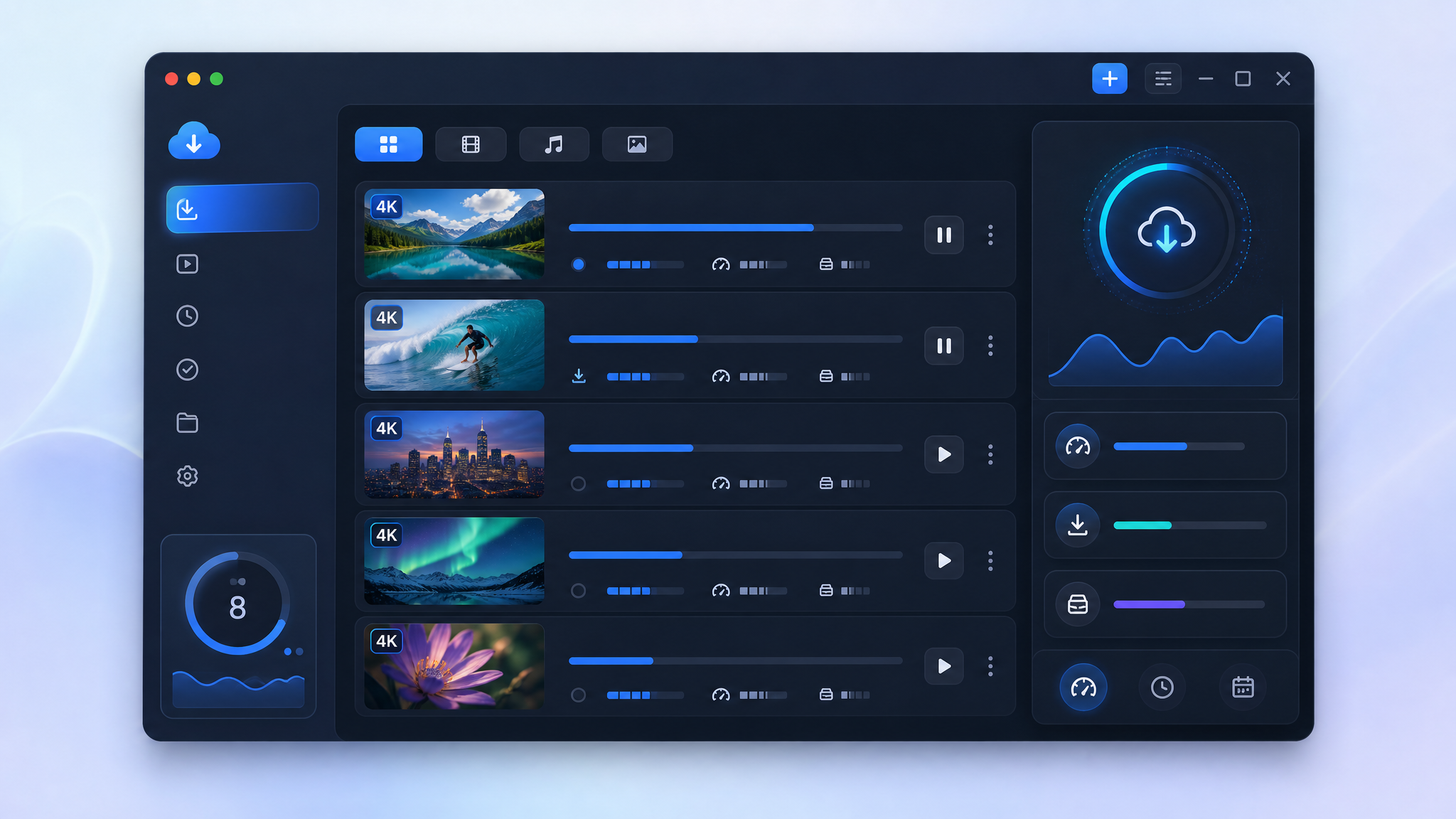
Our top pick: 4K Video Downloader Plus
4K Video Downloader Plus is published by 4K Download, a company in operation since 2009. The 2026 installer is signed, passes 52-engine antivirus scans [source: wi-fiplanet.com review], and installs no background processes or silent telemetry. The original 4K Video Downloader was discontinued in February 2026; the Plus version is the only current release.
What it does well:
- Supports resolutions from 720p to 8K where the source allows
- Batch download mode for playlists and channels
- MP4, MKV, and audio-only (MP3) output options
- 2026 update added AI audio processing (vocal isolation, noise reduction)
- No bundled adware or browser modifications
Limits to know:
- It is a paid tool. A free tier exists with daily download limits.
- It still circumvents YouTube’s rolling cipher, which means it carries the same ToS and potential DMCA exposure as any other third-party downloader. It does not make downloading legally safe. It makes downloading practically safer (no malware, no data harvesting).
- It does not work for DRM-protected content from other platforms.
Download 4K Video Downloader Plus here and review their privacy policy before installing.
Free alternative: ClipGrab
ClipGrab is open-source, free, and carries no bundled software. It supports YouTube, Vimeo, and several other platforms. It is less actively maintained than 4K Video Downloader Plus, and its interface has not been updated as frequently. For users who want a no-cost option with a clean safety record, ClipGrab is the honest pick. The same ToS and DMCA caveats apply.
What This Means for Creators and How to Assess Your Risk
The February 2026 ruling has a specific bite for content creators who download YouTube clips for reaction videos or commentary. This is now the highest-risk use case short of outright redistribution.
Before the ruling, creators could argue that their use of short clips was fair use and that the DMCA did not apply to publicly viewable content. After the ruling, the DMCA Section 1201 question is no longer dismissed automatically. A creator who downloads a clip using a stream-ripping tool for a reaction video now faces a potential Section 1201 claim in addition to a standard copyright infringement claim, and fair use does not defeat Section 1201 as a matter of established law.
Practical steps for creators:
- Use content directly from the YouTube embed (screen record the clip with your commentary running simultaneously). This avoids the circumvention issue.
- Request explicit written permission from the original creator.
- For our tested screen recording tools, see our guide on the best free video downloaders for legal alternatives.
- If you also create short-form content, our guide on how to download TikTok videos covers the different legal framework that applies to TikTok.
Your risk as an individual viewer is very low if you download occasionally for personal offline viewing, never redistribute or monetize the content, and do not download at scale. The practical consequence at that tier is account termination, not prosecution. Your risk climbs if you use downloads in public-facing content, redistribute files, or operate at commercial scale. No individual US user has been criminally prosecuted for a single personal-use download as of August 2026. The ruling gives rights holders a stronger DMCA tool, not an automatic lawsuit.
Legal notice: This article is for informational purposes only and does not constitute legal advice. Copyright law, platform terms of service, and DMCA interpretations vary by jurisdiction and continue to develop. Consult a qualified copyright attorney for advice specific to your situation. The author and publisher are not liable for actions taken based on this content.
FAQ
Is it illegal to download YouTube videos for personal use in 2026?
It is a legal grey zone, not a settled crime. Downloading without YouTube’s permission violates their Terms of Service and, after the February 2026 federal ruling in Cordova v. Huneault, it may also violate DMCA Section 1201 by circumventing the rolling cipher. No individual has been criminally prosecuted for a single personal-use download, but the legal exposure exists. Using YouTube Premium’s offline feature is the only fully legal path for personal offline viewing.
What did the February 2026 DMCA court ruling actually decide?
A US federal magistrate court (C.D. Cal.) ruled that YouTube’s rolling cipher technology qualifies as an access control measure under 17 U.S.C. § 1201. This means that bypassing it with a stream-ripping tool constitutes circumvention even when the video is publicly viewable. The ruling strengthens rights holders’ ability to bring DMCA claims against stream-ripping tools and, in some cases, against individual heavy users.
Does fair use protect me from DMCA liability when downloading YouTube videos?
Not automatically. Fair use is a defense to copyright infringement claims under copyright law. It does not automatically protect against a Section 1201 circumvention claim under the DMCA. The February 2026 ruling left unresolved whether fair use can serve as a shield against Section 1201. Courts have generally treated the two statutes as independent, which means you could face Section 1201 liability even if your underlying use of the content would qualify as fair use.
What is the only way to download YouTube videos without violating the Terms of Service?
Two methods are explicitly permitted. First, YouTube Studio export lets you download videos you uploaded yourself. Second, YouTube Premium’s offline feature lets you save videos inside the YouTube app for offline viewing. These downloads are DRM-protected and cannot be converted or shared, but they do not violate the ToS or trigger DMCA circumvention concerns.
Which YouTube video downloader is safest to use?
Safest in the technical sense (no malware, no data harvesting, no bundled adware) is 4K Video Downloader Plus. It has a 17-year track record, passes independent antivirus checks, and does not install background processes. For a free option, ClipGrab is open-source and clean. Note that “safest” here means technically safe, not legally safe. Both tools still circumvent YouTube’s rolling cipher, which means ToS and potential DMCA exposure remain.
Can I download YouTube videos for use in school or educational projects?
Educational use is one of the factors courts consider when analyzing fair use, but it is not an automatic exemption. Downloading a full copyrighted video for classroom use does not guarantee fair use protection, and the DMCA circumvention issue is separate from the copyright fair use analysis. Many schools and universities have licenses that cover certain types of educational media use. Check with your institution’s library or legal department for guidance specific to your situation.
Leave a Reply